



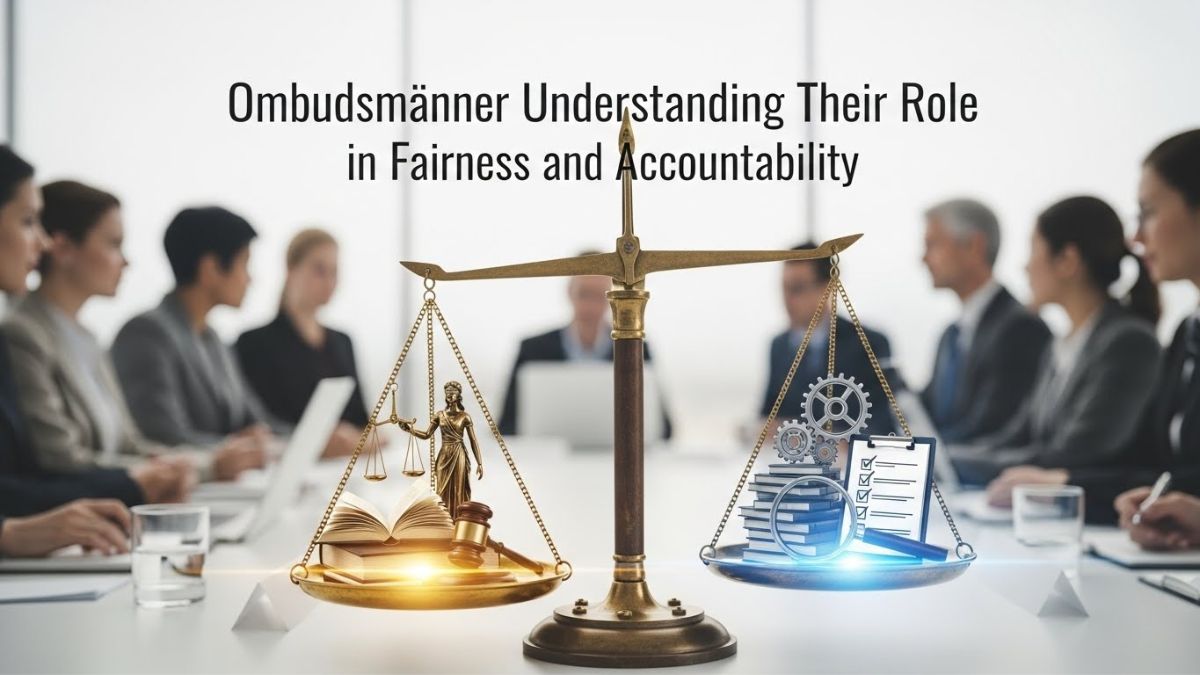
In modern societies, justice and fairness rely not only on laws but also on systems that ensure those laws are applied responsibly. it play a vital role in protecting individuals from administrative injustice, ensuring transparency, and strengthening trust between institutions and the public. As independent figures act as mediators who investigate complaints and promote accountability across public and private sectors.
The Meaning and Origins of Ombudsmänner
it is a term rooted in European governance traditions, referring to independent officials appointed to address complaints against authorities or organizations. The concept was developed to provide citizens with a fair, accessible way to raise concerns without engaging in complex legal processes.
Over time, the role of expanded beyond government institutions into corporate, educational, and healthcare environments. Their purpose remains consistent: to listen impartially, investigate thoroughly, and recommend fair solutions.
The table below outlines the core idea behind and their historical foundation.
| Aspect | Description | Importance |
|---|---|---|
| Origin | Developed in governance systems | Public trust |
| Independence | Free from political influence | Fair judgment |
| Accessibility | Open complaint channels | Citizen support |
| Mediation | Conflict resolution | Reduced disputes |
How Ombudsmänner Function in Modern Systems
The work of involves receiving complaints, evaluating evidence, and communicating with relevant parties. While they do not usually enforce legal decisions, their recommendations carry significant moral and institutional weight.
Their presence often improves organizational behavior by encouraging transparency and ethical conduct. By identifying systemic issues also help institutions prevent future problems.
The following table explains how operate in practice.
| Function | Method | Outcome |
|---|---|---|
| Complaint Review | Case analysis | Fair assessment |
| Investigation | Evidence gathering | Informed decisions |
| Communication | Dialogue facilitation | Mutual understanding |
| Recommendation | Solution proposals | Improved practices |
Ombudsmänner in Government Institutions
In government settings serve as guardians of public interest. They address complaints related to administrative delays, unfair treatment, or misuse of authority. Their role ensures that public institutions remain accountable and responsive.
Citizens often turn to when traditional complaint channels fail. This alternative route strengthens democratic values by giving individuals a voice within the system.
The table below highlights the governmental role of ombudsmänner.
| Government Area | Ombudsmänner Role | Public Benefit |
|---|---|---|
| Public Services | Complaint handling | Fair access |
| Administration | Policy oversight | Transparency |
| Regulation | Ethical monitoring | Accountability |
| Citizen Relations | Mediation support | Trust building |
Ombudsmänner in Corporate and Organizational Settings
Beyond government are increasingly common within corporations and institutions. In these environments, they help resolve workplace conflicts, address ethical concerns, and protect employee rights.
Their confidential and neutral approach encourages individuals to report issues without fear of retaliation. This contributes to healthier organizational cultures and improved internal communication.
The table below illustrates the role of in organizational contexts.
| Organizational Area | Purpose | Impact |
|---|---|---|
| Employee Relations | Conflict resolution | Improved morale |
| Ethics Compliance | Issue reporting | Reduced misconduct |
| Management Support | Feedback mediation | Better decisions |
| Policy Evaluation | Systemic review | Long-term stability |
Why Ombudsmänner Are Essential for Fairness
Fairness depends on more than rules; it requires mechanisms that ensure those rules are applied justly. serve this function by acting as impartial listeners who examine issues without bias.
Their involvement often prevents disputes from escalating into legal conflicts, saving time and resources for all parties involved. By promoting dialogue and understanding strengthen social and institutional fairness.
The following table summarizes how support fairness.
| Fairness Element | Ombudsmänner Contribution | Result |
|---|---|---|
| Impartial Review | Neutral evaluation | Balanced outcomes |
| Accessibility | Open complaint process | Equal opportunity |
| Conflict Prevention | Early intervention | Reduced disputes |
| Trust Restoration | Transparent handling | Stronger confidence |
Ombudsmänner and Accountability in Institutions
Accountability is a cornerstone of ethical governance and management. it enhance accountability by identifying weaknesses in procedures and recommending improvements.
Their findings often lead to policy changes that benefit not only individual complainants but entire systems. This proactive role makes valuable contributors to institutional growth.
The table below explains accountability outcomes linked to ombudsmänner.
| Accountability Area | Action Taken | Institutional Benefit |
|---|---|---|
| Policy Review | Gap identification | Improved procedures |
| Ethical Oversight | Misconduct reporting | Responsible behavior |
| Transparency | Clear explanations | Public confidence |
| Continuous Improvement | Feedback integration | Sustainable systems |
The Skills and Qualities of Effective Ombudsmänner
Successful possess a unique combination of skills, including strong communication abilities, analytical thinking, and emotional intelligence. Their effectiveness depends on trust, which is built through confidentiality and professionalism.
They must also understand legal frameworks, organizational policies, and human behavior. This broad skill set allows them to navigate complex situations with sensitivity and fairness.
The table below highlights essential qualities of ombudsmänner.
| Skill | Description | Importance |
|---|---|---|
| Neutrality | Unbiased approach | Credibility |
| Communication | Clear dialogue | Resolution clarity |
| Analysis | Evidence evaluation | Accurate findings |
| Confidentiality | Privacy protection | User trust |
The Growing Relevance of Ombudsmänner Today
As organizations grow more complex, the need for continues to increase. Globalization, digital communication, and evolving workplace dynamics have created new challenges that require impartial oversight.
Modern institutions recognize that contribute to stability, trust, and ethical resilience. Their role aligns with contemporary expectations of transparency and social responsibility.
The table below outlines factors driving the growing relevance of ombudsmänner.
| Modern Challenge | Ombudsmänner Response | Value |
|---|---|---|
| Organizational Complexity | Independent oversight | System clarity |
| Ethical Expectations | Neutral investigation | Public trust |
| Conflict Frequency | Mediation services | Resolution efficiency |
| Transparency Demand | Accountability support | Institutional credibility |
Final Thoughts on Ombudsmänner
In conclusion serve as essential pillars of fairness, accountability, and trust across both public and private sectors. Their independent role allows individuals to seek justice without fear, while institutions benefit from improved practices and stronger ethical foundations.
By promoting transparency, resolving conflicts, and encouraging responsible behavior help create balanced systems where voices are heard and fairness is upheld. As societies and organizations continue to evolve, the importance of will only grow.